How should you visit Turin’s Palazzo Barolo?

Palazzo Barolo is best approached as an appointment with a guide rather than a grand doorway to try on impulse. Its historic apartments sit within central Turin, but their admission follows a specific visiting arrangement. Once that practical point is settled, the palace offers a useful way to connect decorative interiors with the lives, relationships and institutions associated with a household.
Start by checking the current visitor page maintained by Opera Barolo. It states that visits to the historic apartments are guided. Confirm the available session, language, entrance and any reservation requirements for your date. Exhibition information elsewhere on the palace website may refer to a separate programme, so do not assume that an exhibition ticket includes the apartments.
Ask what belongs to each stage of the palace
Opera Barolo’s history traces a major late seventeenth-century enlargement commissioned by Ottavio Provana di Druent and later changes under the Falletti family. This means the rooms need not be read as the expression of one moment or one patron. Your guide can help separate building history, decoration and later use.
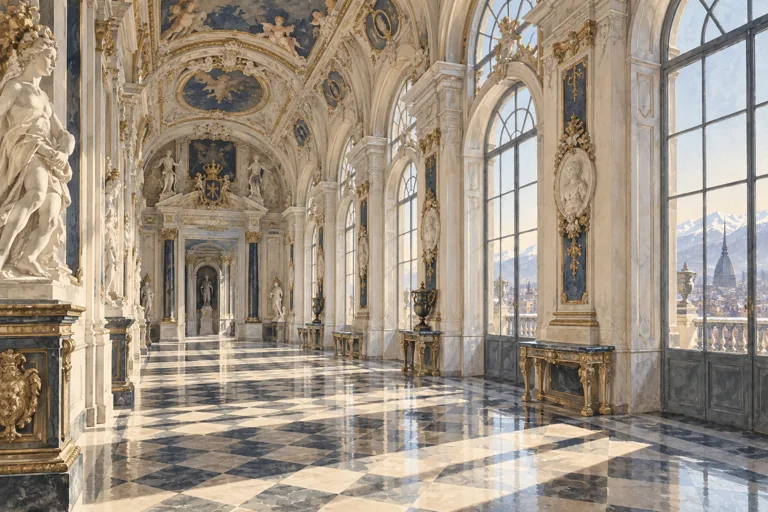
As you enter a room, first notice its proportions and the position of the openings. Then turn to the decorative detail. Does the arrangement encourage you to look upward, across a long axis or toward a particular object? These are observations you can make without confidently assigning every surface to a style. If a feature interests you, ask about its date and function.
Keep a household in view behind the splendour
The last owners, Carlo Tancredi Falletti and Giulia Colbert, belong to the palace’s nineteenth-century story. Opera Barolo describes their cultural circle and charitable work, including the presence of writer Silvio Pellico as secretary and librarian. The organisation itself was established under Giulia’s will after her death in 1864. These connections give the visit a subject beyond attractive furnishings.
Listen for how the interpretation links the residence with activities elsewhere in Turin. A richly decorated room and a philanthropic institution are related through people and decisions, but they are not the same thing. It is worth asking what contemporary documents tell us, whose experiences those documents preserve and what a palace visit can only suggest.
Use the guided format actively
A guide can do more than identify paintings and furniture. Ask a focused question that starts from something visible: how was this room used, who would have entered it, or what evidence supports its present arrangement? There is no need to turn every stop into an interrogation. One good question often makes the next room easier to understand.
Our Palazzo Madama guide offers another way to think about several historical periods within one building. For closer attention to materials and collecting, read about the Accorsi-Ometto Museum. These are separate admissions and substantial visits in their own right. Choose the comparison that interests you rather than building an exhausting palace checklist.
Check the practical details before committing
The palace visitor entrance is on Via delle Orfane. Verify the exact meeting instructions when booking and allow time to find the entrance without assuming a street facade is the meeting point. If your group needs a particular language, seating opportunities or a route avoiding steps, ask about those requirements for the specific session.
Published schedules can change around special events. Use the current palace visitor information, and distinguish its apartment tours from temporary exhibitions with different opening hours. A pass or concession should be checked against the admission you intend to buy. Do not assume that a discount advertised for one programme applies to everything in the building.
Keep this firmly a Turin city visit
The name Barolo can send a traveller’s mind straight to wine country. This article concerns a palace in Turin, not a vineyard visit or transport to the Langhe. If you want a regional wine excursion as well, plan it separately and check its departure town, travel time and inclusions. A shared name is not an itinerary.
For a quieter follow-on in the city, our Consolata sanctuary guide encourages a similarly attentive look at spaces shaped by different centuries. Browse Turin palace and museum experiences when comparing guided choices, reading the itinerary for the actual property included. On another city stop, Milan’s Bagatti Valsecchi Museum offers a contrasting domestic setting. At Palazzo Barolo, leave with a room you remember and a historical question that became clearer through the visit.
Sources & further reading
Turn a good read into a great day.
Find a highly rated Turin experience that brings these stories to life.
Explore related experiences →