Roman Turin: What the Porta Palatina Can Tell You
Turin’s elegant centre can make its Roman past feel like a quieter chapter. The Porta Palatina brings that chapter into view. It is an excellent place to slow down and ask how a city marks an entrance, controls movement and reuses old structures. You need not be an archaeologist to notice that a gate is both practical infrastructure and a statement.
Read an entrance rather than a monument
MuseoTorino describes the Porta Palatina as a well-preserved urban gate dating from the beginning of the Common Era. Its towers and separate passages invite close observation. Imagine the different movements a gateway had to accommodate, then look at the surviving fabric instead of trying to supply a cinematic scene.
Keep reconstruction separate from evidence. Modern landscaping, later restoration and surviving ancient structure belong to different moments. Good interpretation helps you understand that distinction; it does not require the monument to appear untouched by time.
Follow the idea of the city boundary
A gate makes sense as part of a larger urban system. Consider what lay inside and outside, how streets approached it and how later development changed its setting. You are looking at a place whose relationship to the surrounding city has shifted many times.
The city museum also records Roman gate structures incorporated into Palazzo Madama. That is a useful prompt for looking at buildings as layers rather than as single dates. A later façade can coexist with a much older structural story.
Use a short route well
Pair the exterior stop with nearby central streets rather than turning it into a rushed cross-city march. If ancient history is your main interest, check the current archaeological sections of the Musei Reali. Museum access and an outdoor view are separate experiences with different practical requirements.
A guided walk can be especially useful when the visible remains are fragmentary. Ask whether the itinerary actually concentrates on archaeology or merely passes the gate among many other sights. The right label on a tour is less useful than a clear list of themes and stops.
Make room for unanswered questions
Archaeological places are interesting partly because not everything survives. Look for explanations that tell you how scholars know what they know. A careful account may use phrases such as probable or reconstructed, and that is a strength rather than a disappointment.
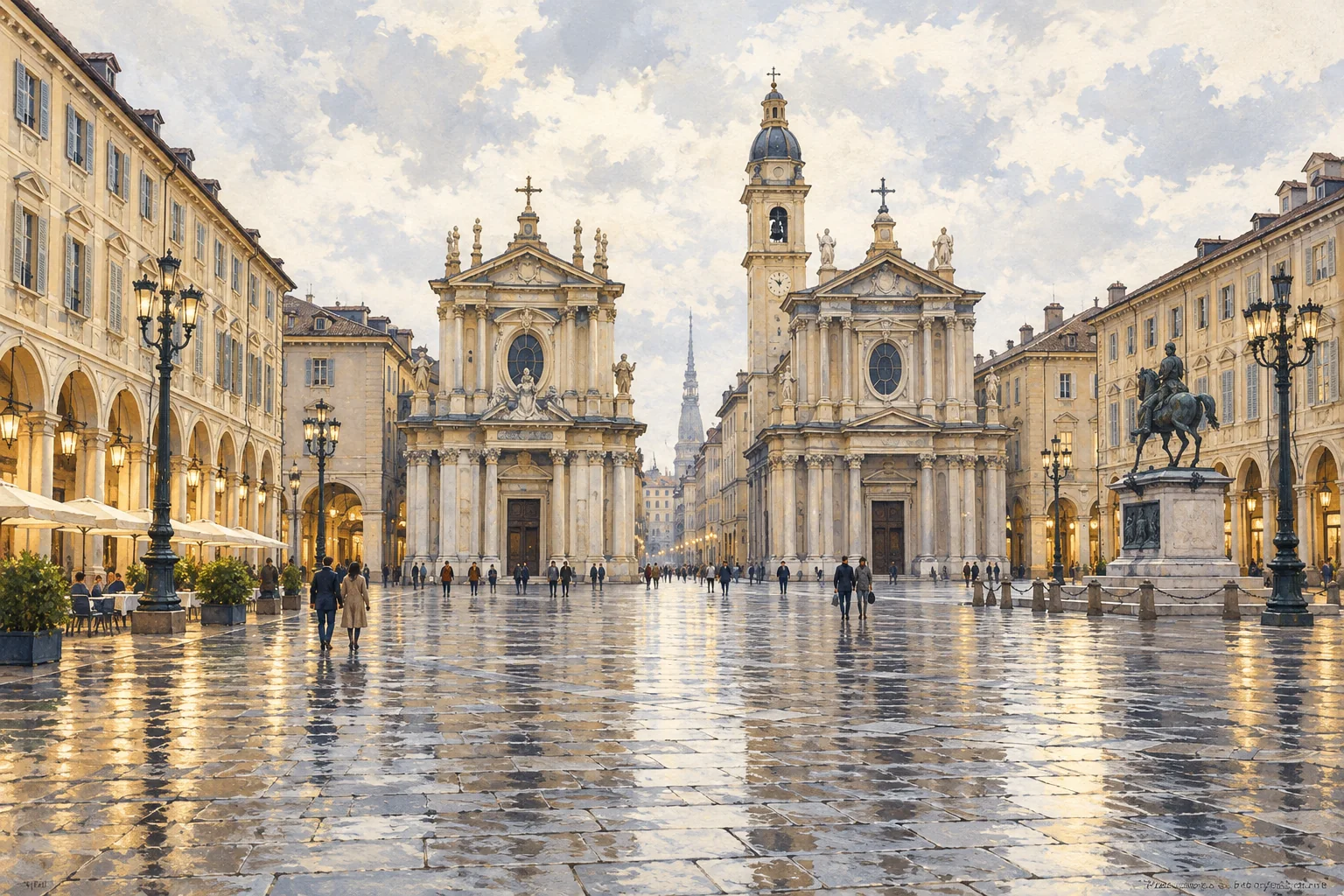
Afterward, compare the old gate with a royal square. Both organize movement and communicate authority, but they do so through different forms. That comparison can make an ordinary walk through Turin unusually rich.
A small exercise in reading layers
Stand where you can see both the surviving gate and part of its present surroundings. Describe what is visibly different: materials, building heights, street surfaces and the amount of open space. Then consult the historical interpretation. This sequence keeps the evidence of your eyes separate from the story you have brought with you.
It is tempting to mentally remove everything later and declare that you have found the real city. Resist that shortcut. A reused or restored monument has a history after its first construction, and those later choices can be revealing. Preservation itself expresses what a community considers worth retaining and how it wants the past to appear.
A guide can help explain which elements are ancient, which have been repaired and which belong to the modern setting. Ask for the evidence behind a claim rather than a dramatic certainty. Dates and functions sometimes require careful qualification. That is part of responsible historical interpretation, not a reason to lose interest.
If you are walking with children, turn the visit into a gentle observation task: find different openings, compare shapes, and consider who or what would pass through each. Avoid encouraging climbing or touching protected fabric. Curiosity does not require physical access to every surface. The exercise works equally well for adults and makes a short exterior stop more meaningful than a quick photograph before moving on.
Make it part of your Turin day
Browse history experiences, continue with the royal city, and keep the route manageable with short visits. For another northern Italian Roman city, explore Verona Tour Hub.
Sources & further reading
Turn a good read into a great day.
Find a highly rated Turin experience that brings these stories to life.
Explore related experiences →