Turin’s Fondazione Merz: how do you plan around an exhibition change?

For a visit to Turin’s Fondazione Merz, the exhibition calendar comes before the route map. At our review on 25 October 2026, the foundation’s homepage states that the venue is closed for installation and will open on 29 October. That notice overrides its usual weekly hours. If you are in Turin before the reopening, plan another cultural stop and keep Merz for a later date; an exhibition change is not a period of public access to works in progress.
What is changing, and when?
The announced exhibition Marisa Merz: La danza delle ore runs from 29 October 2026 to 4 April 2027 and forms a project across Fondazione Merz, GAM and Castello di Rivoli. The centenary of Marisa Merz’s birth gives the project its occasion. Treat these as separate venues with their own practical arrangements. Castello di Rivoli is outside Turin, and the shared exhibition project does not by itself establish one ticket, one entrance or a continuous walking route.
Before choosing dates, decide which part interests you most. Read the description for that venue, check its actual opening calendar and then consider whether a second location adds something to the trip. A multi-site project can reward comparison, but it can also become exhausting if treated as a checklist. One attentive visit is a sound choice when time, energy or transport connections are limited.
Why does this building matter?
The foundation’s history explains that it opened in 2005 in the former Officine Lancia power station in Borgo San Paolo. Its programme connects the work of Mario and Marisa Merz with contemporary artistic projects. That industrial setting is useful context, but it is not a promise that a particular work from an earlier exhibition will remain visible. Nor does the existence of a library or archive imply unrestricted research access for an ordinary visitor.
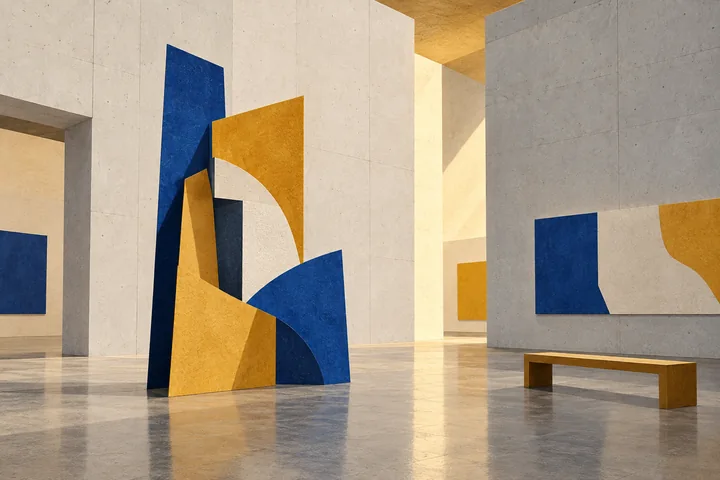
When the galleries are open, begin by noticing the relationship between the room and what is installed within it. Does a work ask you to move around it, look up, approach slowly or keep a distance? Follow the permitted route and any staff guidance. You need not understand an artist’s entire career before responding to scale, light, spacing or materials. Let a first observation form before reading the interpretation that accompanies it.
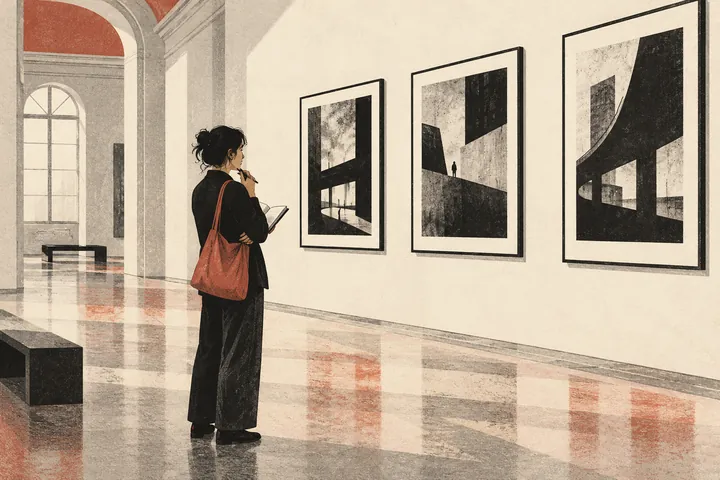
Then return to the work with the label in mind. Has the information changed what you notice? A title or date may add a context that was not visually available, while a material description may correct an assumption. Keep those two stages separate in your notes: what you saw and what you learned. The distinction makes later discussion more precise, especially when an installation is difficult to capture in a photograph.
How can you plan around temporary closures?
Start with the current exhibition page, then use the official visitor information for the details that apply to your date. The normal weekly timetable is not evidence that a venue is open during installation. If one particular work, room or access provision is central to your visit, ask a specific question before travelling. Temporary layouts can change how a space is navigated even when the building itself is familiar.
For a useful alternative during the changeover, compare the current programmes at OGR and GAM. These have their own calendars and admission rules; proximity on a city map does not make them interchangeable. Select the actual exhibition that interests you. Do not arrive expecting an event remembered from an older article or a social-media photograph to remain in place indefinitely.
If you decide to include the third venue in the Merz project, our Castello di Rivoli planning guide helps frame it as a separate excursion. Allow time for reaching Rivoli, finding the entrance and returning. Check transport against your chosen day rather than squeezing a museum visit into the final gap before an infrequent connection. It is perfectly reasonable to spread a multi-venue exhibition across different days.
What can you take away from a changing exhibition?
An installation has a beginning and an end, and that temporary character can be part of its interest. Make a note of the venue and date with any permitted photographs. This keeps an image of one arrangement from becoming an accidental claim about the institution’s permanent display. It also helps you remember the particular relationship between works, architecture and your own movement through the room.
Travellers continuing to Milan might compare the questions raised here with Pirelli HangarBicocca, another distinct setting in which space and contemporary art interact. For a guided activity in Turin, explore our arts and culture experiences and verify the named venue, meeting point and inclusions. The immediate practical lesson remains simple: for Fondazione Merz in late October, plan from the dated reopening notice, then give the exhibition the time and attention its actual arrangement invites.
Sources & further reading
Turn a good read into a great day.
Find a highly rated Turin experience that brings these stories to life.
Explore related experiences →