What did it take to serve dinner at Racconigi Castle?

A dinner in a royal residence looks quite different from the two ends of its journey. At one end there are guests, furniture and a room arranged to receive them. At the other there must be space to heat food, organise equipment, wash what comes back and keep the whole operation moving. At Racconigi Castle, south of Turin, the nineteenth-century kitchens bring that second set of questions into a visit to a Savoy residence. They are worth asking before you reach the kitchen door.
Start thinking about dinner upstairs
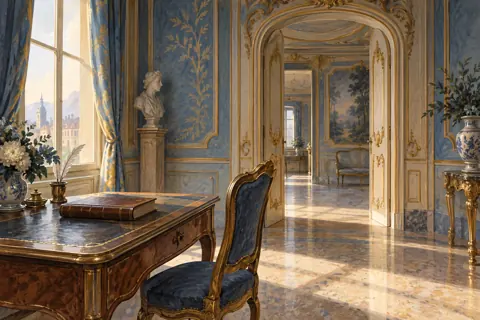
As you move through the castle’s formal interiors, pick one doorway through which a person carrying something could pass. Think about the space available for turning, what happens when two people meet and how far a visitor in the room could see into the next one. You need no knowledge of court etiquette to recognise that an elegant entrance for one person might be awkward for somebody with a tray. The building had to accommodate both kinds of movement, even if it preserved the memory of one more visibly.
Keep that doorway in mind as you move from formal rooms towards service areas. A serving dish has little independent meaning in a store cupboard. Carry it through a sequence of rooms and it establishes relationships between the person who prepared it, the person who handled it and the people waiting at the table. The regional museums directorate’s current Racconigi visitor information identifies the nineteenth-century kitchens in specified castle itineraries. The exact route depends on the day and type of visit.
What the sinks can tell you
Some evidence for the scale of the operation survives outside the public kitchen visit. In its study of rooms later used for storage, the directorate describes sinks and large wall cupboards in spaces formerly used for supervising and servicing the kitchens. Other rooms in the same wider storage area had once formed part of an apartment. This is documented evidence about changes of use across the building. Those storage rooms are a subject to read about, without assuming that a standard ticket takes you inside them.
A sink tells you something different from a painted dining scene. Water, cleaning and surfaces on which things can be set down all take space. A cupboard tells you that the work also had intervals. Objects had to wait somewhere protected and identifiable before coming into use again. In any service space open on your route, try to distinguish evidence fixed in the building from movable furnishings placed there for display. The relationship between wall, opening and fitting may be a more dependable clue than a single handsome vessel.
Follow the route you can actually use
Consult the specific entry for your date before setting out. The castle lists accompanied groups and, at certain times, other visit formats. It also describes a separate themed route about the private life of a king and separate park itineraries. On a reservation, check for the word cucine if the kitchens are central to the day you want. For travellers comparing residences, the arrangements at Moncalieri and the route at Stupinigi are useful points of comparison. Each property defines its own visits.
There is an important access detail at Racconigi. The directorate identifies an elevator and accessible routes on the first and second floors, and explicitly reports architectural barriers at the kitchens. Contact the castle about the exact arrangement for your group before choosing a slot. Ask what can be explored together and whether staff can show or describe the kitchen material from an accessible point. The directorate also advises that rooms on the visitor route are unheated, a practical consideration for an autumn or winter excursion.
Make Racconigi the day’s destination
The castle lists Racconigi station for arrival by train. Check the service you intend to use both ways, then plot the journey from the station to the actual visitor entrance. Allow time before the booked start. The castle asks ticket holders to arrive punctually and warns that late admission cannot be guaranteed. The guide to visiting Turin without a car can help with transport planning. Compare Turin royal residence experiences by the named residence and the interior route each includes.
Before leaving, try telling the story of dinner in reverse. Begin with an empty plate returning through a doorway, then the places where it might be received, cleaned and put away. Separate the arrangements you actually saw from the steps you inferred. A palace tour often remembers the people who sat down to eat. At Racconigi, an attentive look at the service side gives some of that attention back to the people who made the meal possible.
Sources & further reading
Turn a good read into a great day.
Find a highly rated Turin experience that brings these stories to life.
Explore related experiences →