What should you look for in Piazza Castello in Turin?

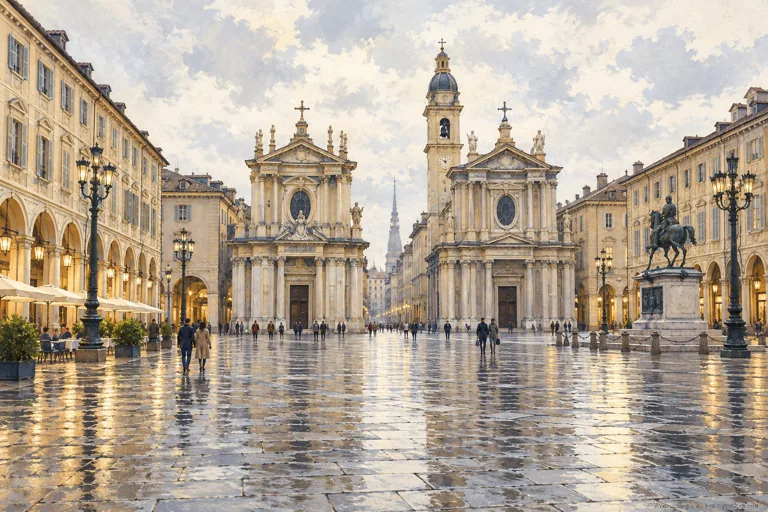
Piazza Castello is a useful place to begin Turin because several different versions of the city meet here. A fortified building, an elegant royal frontage, busy streets and everyday pedestrian life share the same space. You do not need to identify every statue to enjoy it. Start by walking around Palazzo Madama, look toward the Royal Palace, and then choose one street or one interior to explore more closely. That modest plan makes the square a destination rather than a hurried crossing.
First, look at Palazzo Madama from more than one side
The building at the centre of the square rewards a slow circuit. Its pale, formal facade and its older brick fabric do not tell the same architectural story. This is a particularly accessible introduction to the idea of a layered monument: later patrons could transform the appearance of a building without erasing everything that came before. Compare the scale of the windows, the weight of the masonry and the way each side meets the open square.
The regional tourism authority records Palazzo Madama’s later roles as a royal picture gallery and the seat of the Subalpine Senate. Those changing uses matter. A palace is not merely the private home of a ruler; over time it can become a place where art is classified, political authority is performed and national history is remembered. Our account of Turin and Italian unification develops that political thread without trying to compress it into a single facade.
Turn toward the Royal Palace
The Royal Palace offers a different exercise in looking. Rather than concentrating on one decorative detail immediately, notice the overall ordering of the frontage and the space before it. Ask how architecture establishes an approach: where does your eye settle, where might a visitor have paused, and how does a large open area make an entrance feel more important? These are observations you can make without claiming to reconstruct a particular ceremony.
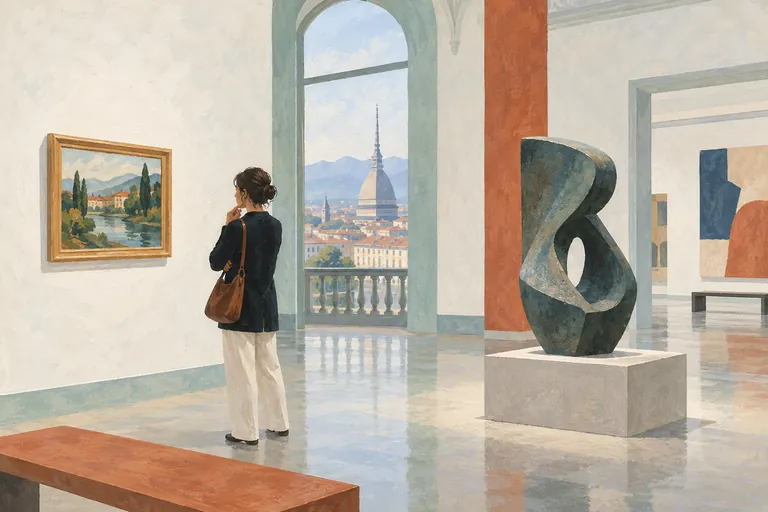
The Royal Museums trace the palace’s development through successive architects and rulers, including work commissioned under Carlo Emanuele I and later transformations under Carlo Alberto. The present building therefore deserves more than a label such as “Baroque palace.” If the interior is your priority, use our guide to choosing a royal Turin visit before buying admission. A walk in the square and a museum visit have different demands on time and attention.
Read the streets as directions, not a checklist
The national tourism portal identifies Via Roma, Via Garibaldi, Via Po and Via Pietro Micca among the streets meeting at Piazza Castello. Stand safely away from moving traffic and use those connections to orient yourself. Which direction leads toward your next confirmed appointment? Which offers the sort of walk you actually want: window-shopping, architectural detail or a route onward toward the river? A map becomes more memorable when its lines correspond to a view you have seen.
It is tempting to promise yourself all four directions. A better short visit chooses one. Follow a street for the pleasure of seeing how the square opens into the surrounding city, then allow enough time to return or continue deliberately. Our calm one-day Turin route can help you decide where this walk belongs in a larger day.
Choose between an outdoor introduction and a deeper visit
If you have limited time, make the square your main subject. Look at a whole building, then a detail, then the relationship between buildings. A family can turn that into a simple game: find two different window shapes or explain which entrance seems most ceremonial. There is no need to turn every stop into a lecture. If rain, fatigue or mobility needs change the plan, choose your indoor stop before crossing the square repeatedly.
For an expert-led introduction, compare the Turin walking tours by their actual route, meeting point and included admissions. A tour that passes a palace is not necessarily a tour inside it. Check the current museum schedule separately, especially when an exhibition, conservation project or special event affects access. Avoid reserving two fixed entry times so closely that the square becomes only the space you rush through between them.
Carry the habit of looking into your next city
Piazza Castello provides a useful way of reading other Italian places: distinguish the building’s present appearance, its earlier fabric and the institutions that have occupied it. If Verona is also on your route, Verona’s Castelvecchio guide offers another encounter between fortified architecture and museum use. The comparison is most rewarding when you keep each city’s history distinct. Before leaving Turin’s square, take one last broad look. The details now have a setting, and the setting has become easier to understand.
Sources & further reading
Turn a good read into a great day.
Find a highly rated Turin experience that brings these stories to life.
Explore related experiences →