Why Does Turin Have an Egyptian Museum?
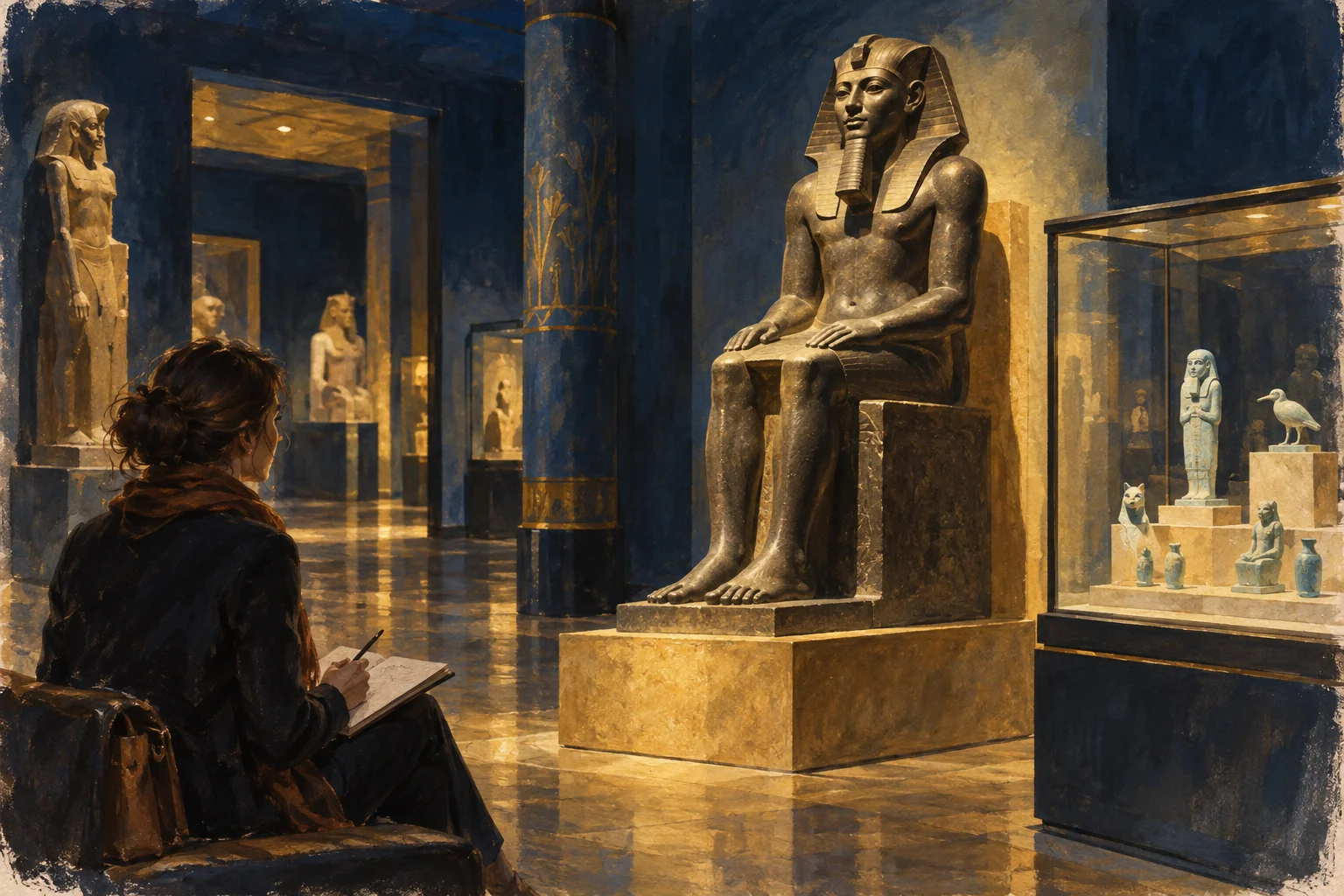
An Egyptian museum in Piedmont invites a good question before you even enter: how did these objects come to Turin? The answer is a history of collecting, royal ambition, archaeological work and changing scholarship. Knowing a little of that story makes the museum more than an impressive succession of statues. It turns the visit into a conversation about how knowledge is assembled.
A collection formed over time
The Museo Egizio traces its foundation to 1824, when King Carlo Felice acquired Bernardino Drovetti’s collection. Earlier Egyptian objects had already reached Turin, and later archaeological campaigns further shaped the holdings. The museum’s own history is the best starting point for following these stages without compressing them into a single romantic origin story.
That distinction matters. A museum is not a neutral container into which the past simply arrives. People choose what to collect, what to record, what to display and what questions to ask. Reading labels about provenance and excavation can be as rewarding as admiring the most spectacular object.
Look for lives as well as monuments
Large sculpture naturally catches the eye. Smaller things often reward the slower visitor: tools, household objects, written material and details of craftsmanship. Ask what an object did, who used it and what survives of its original setting. These questions move the experience beyond a list of famous names.
You do not need prior expertise. Select a theme that interests you, such as writing, work, belief or the making of images. Follow that theme through a few galleries and compare your impressions. A focused visit is easier to remember than an attempt to absorb every label.
Choose the right kind of visit
Independent admission offers control over pace. A guided visit can supply context and help you find a route through a complex collection. Before booking, confirm whether admission is included, the tour language, group size and duration. Check whether time to remain independently afterward is part of the arrangement.
A private guide is not automatically the best choice for every traveler. Think about whether you prefer conversation, a structured introduction or quiet looking. The most useful tour is the one that matches how you learn.
Keep historical curiosity honest
Avoid treating the galleries as proof of a timeless, unchanging Egypt. Objects come from different periods and contexts. Let the museum’s dating and explanations do their work. When a reconstruction is offered, notice what is known and what is interpretive. That habit enriches visits to every archaeological museum, not just this one.
Questions that make an ancient object more interesting
Begin with what you can see before reading the interpretation. What material appears to have been used? Which parts show wear, breakage or careful finishing? Is the object designed to be handled, seen from a distance or placed in a particular setting? Then compare your observations with the label. The difference between your first guess and the museum’s explanation is often where learning begins.
Next, ask what kind of information is missing. A beautiful object may survive without a complete account of its owner or use. An excavated object may have a more informative context than one acquired long ago without detailed records. That does not mean one is worth looking at and the other is not. It means they support different questions and different degrees of confidence.
With a guide, ask for one example of how interpretation has changed. Scholarship is an active process, and a museum visit can reveal that process rather than simply deliver settled conclusions. Children can join in by making a careful drawing or choosing one detail they would ask a curator about.
After the visit, write a short description of the object you remember best without looking at your photographs. What stayed with you: its appearance, a story, or a question? That exercise turns a large collection into a personal memory while keeping curiosity open for the next museum.
Make it part of your Turin day
Compare museum and cultural experiences, read our practical Museo Egizio guide, and explore Roman Turin for another encounter with the ancient world. For a later archaeology-focused stop, see our Colosseum and Ancient Rome guide.
Sources & further reading
Turn a good read into a great day.
Find a highly rated Turin experience that brings these stories to life.
Explore related experiences →