Turin’s San Lorenzo: how should you look at Guarini’s dome?

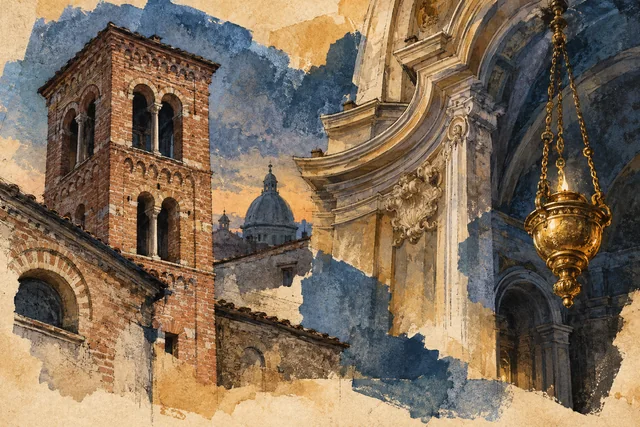
Turin’s San Lorenzo can make a short visit feel surprisingly expansive. Near Piazza Castello, the church invites you to exchange the horizontal business of crossing a square for the upward movement of an intricate dome. Guarino Guarini’s architecture rewards slow looking, but there is a practical qualification before any aesthetic advice: conservation work is documented, and the church remains a place of worship. Check current arrangements rather than planning around an old photograph of an entirely clear interior.
What the current information actually says
The Ministry of Culture’s conservation notice, published in August 2026, records work beginning in 2026 with completion anticipated in 2029. It identifies the roof, windows and exterior surfaces among the concerns. That is evidence of a project, not a daily visitor-access report. It does not establish which view will be unobstructed on your chosen morning. The church’s own website separately publishes tourist visiting hours and excludes visits during certain celebrations. Read both kinds of information for the question each can answer.
If the dome is the main reason for your journey, ask the church about the current sightline before travelling specially. If you are already exploring the centre, keep the visit flexible. A partial view can still be interesting, but it should be a choice made with accurate expectations. Do not interpret a conservation announcement as proof of complete closure, or a normal opening notice as proof that no work is visible. Those are different claims, and neither follows automatically from the other.
Follow a line, then look at the gaps
MuseoTorino describes Guarini’s seventeenth-century design and the interlacing ribs that produce a star-like pattern overhead. Rather than trying to count everything at once, select one line and follow it with your eyes. Notice where it crosses another, where a window interrupts the surface and where the whole seems to gather towards the top. Then shift your attention to the spaces between the lines. Openings can do as much visual work as the stone or plaster that frames them.
This is a way of looking, not an engineering diagnosis. The appearance of lightness does not tell a visitor how every load is carried. Avoid turning the dome into a story about impossible construction or secret forces. Its fascination is strong enough without those additions. You can enjoy the contrast between a small patch of visible sky or glass and the much larger form surrounding it, while leaving technical questions to measured drawings and specialist accounts.
Look down again before moving. The interior’s coloured marble and the route towards the altar provide a different scale from the overhead geometry. Compare what your eye follows at body height with what it follows above. A few quiet minutes alternating between those levels can reveal more than a continuous phone video. Keep the circulation clear, especially at the entrance and around people praying. If photography is permitted, take the picture after looking rather than making the camera your only view.
Understand the setting without collecting every royal site
The church’s history belongs to the Savoy court as well as to religious life. MuseoTorino connects its dedication with Emanuele Filiberto’s victory at Saint-Quentin on Saint Lawrence’s day in 1557; the surviving architectural project came later. Keep the commemoration and the building campaign separate. A founding intention is not the same date as the fabric in front of you. That distinction is useful throughout Turin, where dynastic stories and later rebuilding often sit closely together.
Our Piazza Castello guide helps situate the visit. Nearby Palazzo Madama offers another lesson in different periods occupying one structure, while the Consolata sanctuary rewards a separate, equally respectful look. You do not need to fit all three into a single museum-heavy morning. Choose the second stop according to your attention, opening arrangements and appetite for walking.
If travelling to Milan later, the Portinari Chapel’s relationship between painting and architecture makes a thoughtful comparison, without implying the spaces share the same history. For guided context in Turin, inspect our history experiences and verify whether San Lorenzo is actually included. No ordinary city walk should be assumed to provide special dome access. The rewarding encounter here begins on the church floor, with a clear view when available and a willingness to look carefully.
Sources and planning information
Real Chiesa di San Lorenzo — Official visitor information; MuseoTorino — Chiesa di San Lorenzo; Ministero della Cultura — San Lorenzo conservation project. Current information checked on 16 October 2026; consult the official pages again before travelling.
Sources & further reading
Turn a good read into a great day.
Find a highly rated Turin experience that brings these stories to life.
Explore related experiences →