Turin’s Archivio di Stato: how does a public visit differ from archival research?

An archive can be fascinating before you have read a single historic document. The arrangement of rooms, the systems used to describe records and the care involved in making material available all reveal something about how a society preserves evidence. At Turin’s Archivio di Stato, however, a cultural visit and a research visit are different activities. Planning begins by deciding which one you intend.
A public opening may introduce the institution and its architecture. A reading-room visit serves the consultation of records under specific rules. Neither automatically includes the other. Arriving with that distinction clear is a courtesy to staff and researchers, and it makes the experience more rewarding for you.
Check the site as carefully as the institution’s name
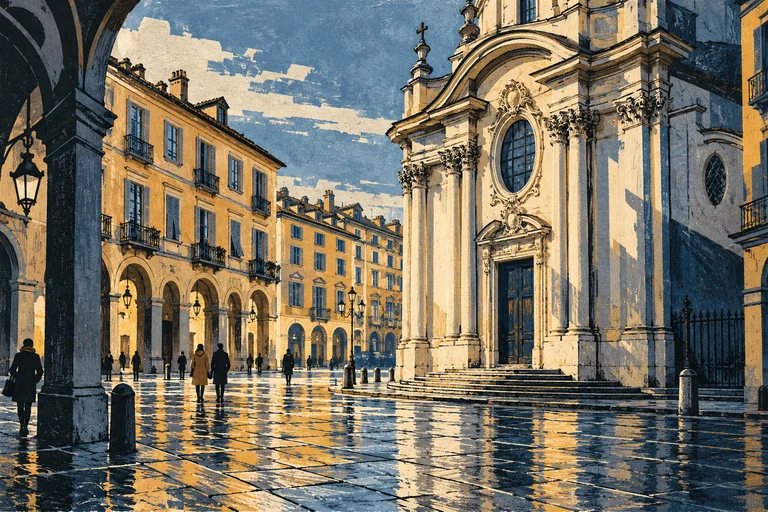
The archive’s official website identifies two locations: the Sezione Corte at Piazza Castello 209 and the Sezioni Riunite at Via Piave 21. An announcement headed “Archivio di Stato di Torino” therefore needs a second reading for its exact address, entrance and meeting instructions. Do not let a familiar photograph of Piazza Castello decide where you go.
For a public event, save the full confirmation and allow time to find the designated meeting point. For research, start with the institution’s consultation information and the description of the records you want. A topic in your mind does not yet identify a document, and records relevant to a question may require advance preparation.
Use a dated programme as an opportunity, not a guarantee
On 1 November 2026, the archive’s official programme advertises a restoration-related visit on 3 November and participation in Palazzi Aperti on 4 November. The latter is described as free and reservation-only. These notices establish that an event has been announced; they do not establish that a place remains available or that a walk-in visitor will be admitted.
Check the relevant event page for the current booking procedure, route and conditions. Where a route includes other institutions, read their requirements too. The Palazzi Aperti description includes several civic and state buildings, so a general archive opening time is not an adequate guide to the complete outing.
If an advertised date does not suit you, look for the next authorised programme rather than assuming that ordinary working hours mean tourist access. A reserved event can make a place visible to a wider public precisely because staff have prepared a particular route and explanation for it.
Ask how records become usable evidence
During a guided visit, a useful question is how a record’s original purpose differs from the questions later researchers bring to it. A document produced for administration may become evidence for family, economic or architectural history. Its value does not depend on having been created with a future museum visitor in mind.
Notice the language used to describe what is shown. Is it an original, a reproduction or a modern explanation? Who created it, and what larger group of records does it belong to? Those questions help prevent the attractive fragment from becoming detached from the context that gives it meaning.
A displayed map, for example, may invite you to compare an earlier representation with a place you know today. Begin with the date, purpose and scale supplied by the archive. A map is a made object with conventions; it is not a transparent window onto every aspect of the landscape. If the guide identifies uncertainty, preserve it in your notes instead of smoothing it away later.
Research access comes with a different preparation
If you intend to consult records, read the current registration, reservation, handling and reproduction instructions before travelling. Do not infer permission to photograph or publish an image from permission to read a document. The archive’s homepage carries updated service notices, so older travel descriptions are a weak foundation for research arrangements.
Formulate a manageable question and record the references you find in the official finding aids. Staff guidance can help you understand a system, but it does not turn an unprepared visit into an unlimited research service. Leave time to work carefully, respect other readers and follow the supports and handling procedures supplied for each item.
A public tour, meanwhile, requires no pretence that you are conducting original scholarship. It is enough to become more attentive to the work that makes scholarship possible. Architecture and cataloguing belong to that story alongside the documents themselves.
Place the archive within a Turin day
Our Piazza Castello guide helps orient a central walk, while Palazzo Madama introduces another building whose uses changed over time. Our Italian Unification guide offers historical context without making every record an illustration of a single national story.
For a separate Milan visit, the Biblioteca Braidense guide similarly distinguishes a public display from reader services. Compare organised outings through our Turin experience collection, checking whether the archive is actually named and what admission is arranged. The best outcome may be one clearer question about a document, and a stronger appreciation of the people and systems that keep it available.
Sources & further reading
Turn a good read into a great day.
Find a highly rated Turin experience that brings these stories to life.
Explore related experiences →